

On the back of a man
“Camallare”: An Ingrained Habit
In the lands of the Ligurian farmers, where even the wheel was an impracticable luxury, everything needed for agricultural activity and daily needs was transported on man’s back. This effort, called “camallare”, was so rooted in peasant life that it became second nature, almost physiological like walking.
Teaching Young People
From an early age, children learned to carry small loads, more as a game or for teaching than for real necessity. Women carried the weights on their heads, protected by a pad called “u sutestu”, while men carried them on their shoulders and back, with a folded jacket or a bag stuffed with straw, called “u pagéttu”, to protect them.
Transport Techniques
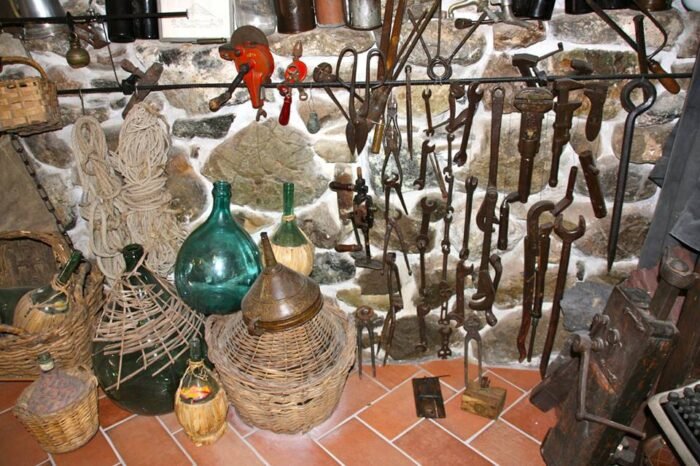
Each type of cargo had its own way of being transported. The manure, for example, was moved into wicker containers such as “u vàllu” or “a cùffa”, easy to overturn. Potatoes, chestnuts, corn and other agricultural products were brought in corbe or sacks. The wine traveled in caratelli or “in ta barì”, while the olives were measured in “quartes”. Even water, before the advent of lead pipes, was transported with two buckets hanging from the ends of a wooden balance, called “u bázeru”, which rested on the shoulders.
Transport of Grass and Hay
The grass and leaves were enclosed in enormous sackcloth handkerchiefs, called “a ridàssa”, and it was up to the women to carry them because they were lighter. The hay was compressed into bales of about 70 kilograms, called cages (“gàgge”). The logs, the heaviest and longest loads, were carried by men in pairs on the shoulder.
The Farmer’s Return Home
The farmer’s return home almost always took place “camallando”, and the teaching was clear: one should never return empty-handed. Even just a little grass for the rabbits, fruit, mushrooms or dry fagots to light the fire, it was all worth it. This was true for everyone, regardless of age or gender.
The Paths and Stairways
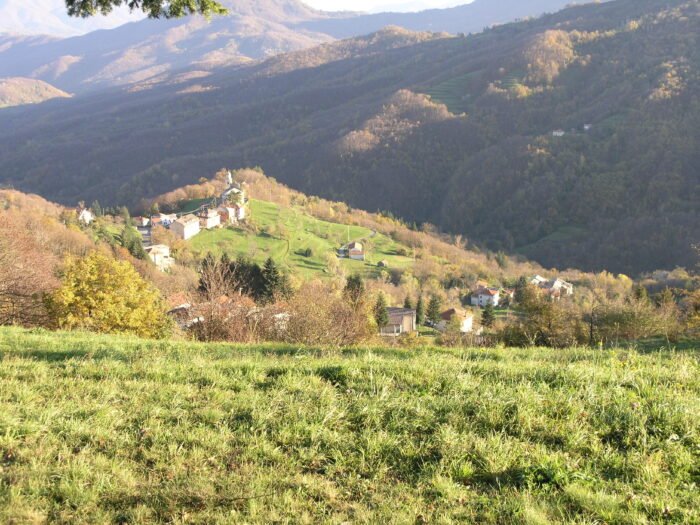
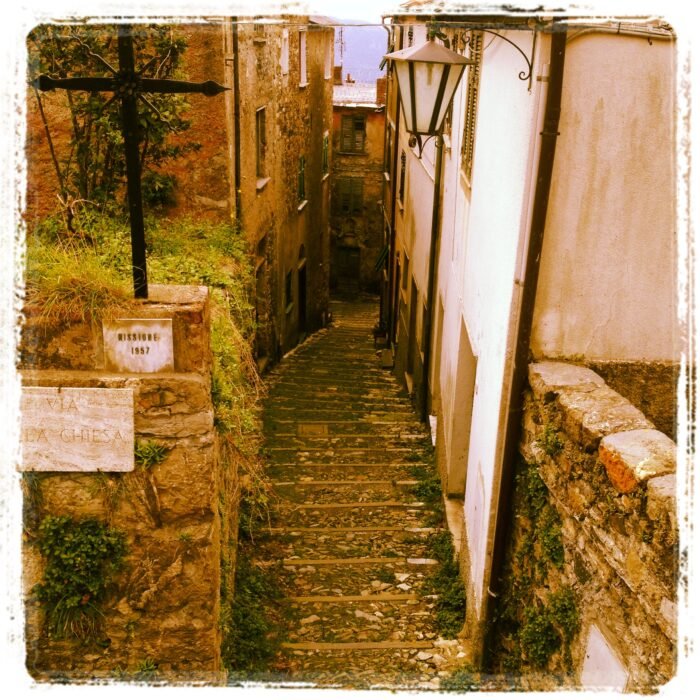
The paths between the scattered houses, the bold slate ladders cantilevered on the walls of the “bands”, in the sowing and harvesting seasons, were walked by slow and tireless porters of all ages and sexes. Each one, according to their own strength, shuttled between home, fields and forest, unloading – day after day – what little a human being could carry.

Sources
Porcella M., “La fatica e la Merica”, Genova, Sagep, 1986
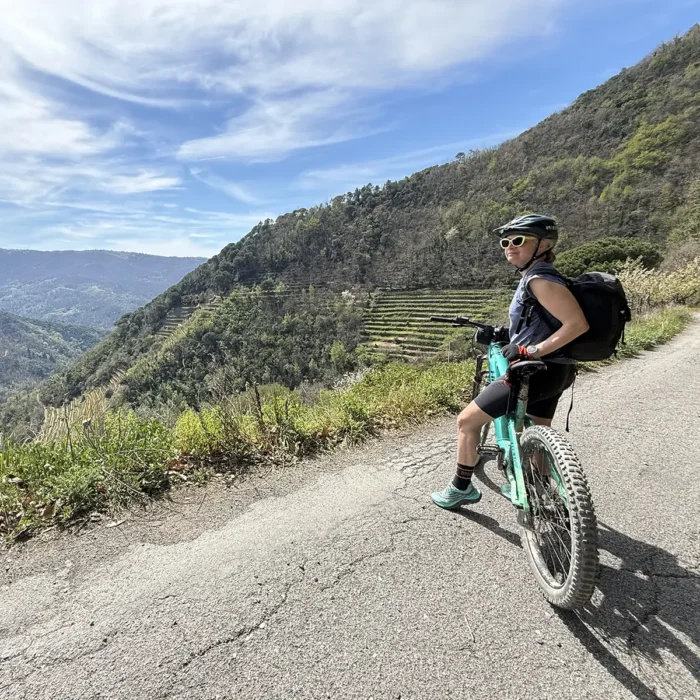
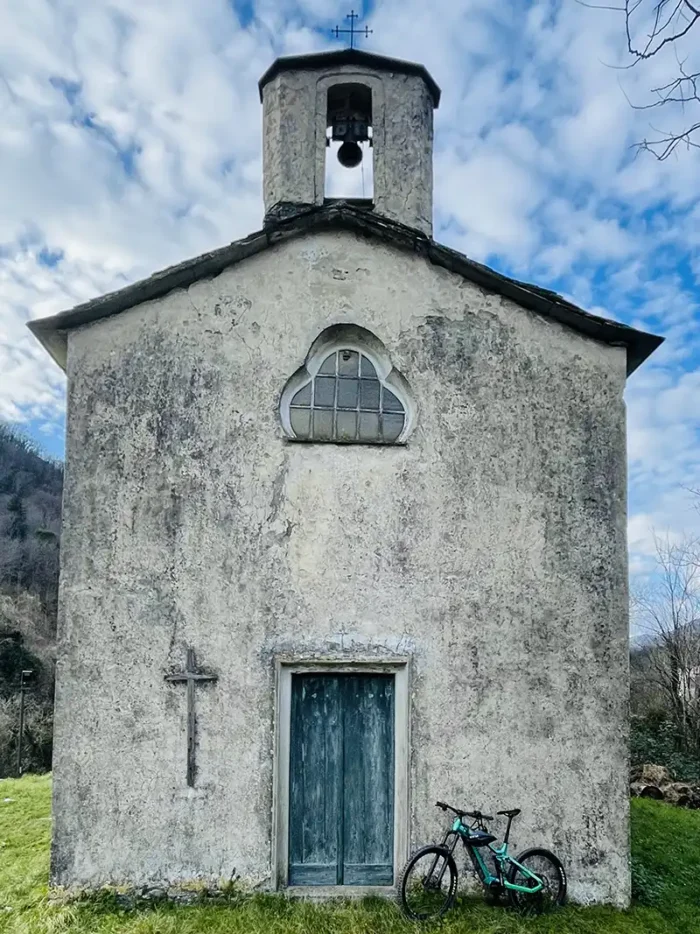
Trekking and cycling routes that may interest you
Itineraries of different durations and suitable for every taste and level of preparation, to discover the most beautiful and evocative places and panoramas of the Ligurian Tigullio.



Local experiences that might interest you
Let yourself be guided and be surprised by the hidden treasures that the Ligurian Tigullio area is capable of offering you in every season.
Sport
Hiking routes, climbing, mountain biking and much more… Choose the sport in contact with nature that’s right for you!

Culture
Shows, Theatre, Music, Food and Wine, Reading… Experience the cultural and artistic proposals, immersed in the Ligurian landscape.

Nature
Geology, bird watching, nature engineering and other initiatives, to cultivate awareness and responsibility for environmental issues.
More heritage that may interest you
Catalog of the tangible and intangible heritage, a precious resource of the Tigullio for community building and local development.





Join us!
Contribute to preserve the history and traditions of the Ligurian Tigullio area, and keep them alive for future generations.