

Fieschi Castle – Borgo Rotondo
The Origins of a Strategic Fortress
The origins of the Fieschi Castle are deeply rooted in a location as evocative as it was strategic. In the Upper Vara Valley, an essential route once passed through, connecting and facilitating trade between the Ligurian coast and the Ligurian–Emilian Apennines. Yet commerce was not the only factor: the military conflicts that affected this area made it necessary to establish a stronghold capable of defending and controlling the territory.
The Borgo Rotondo: When Defense Becomes Community
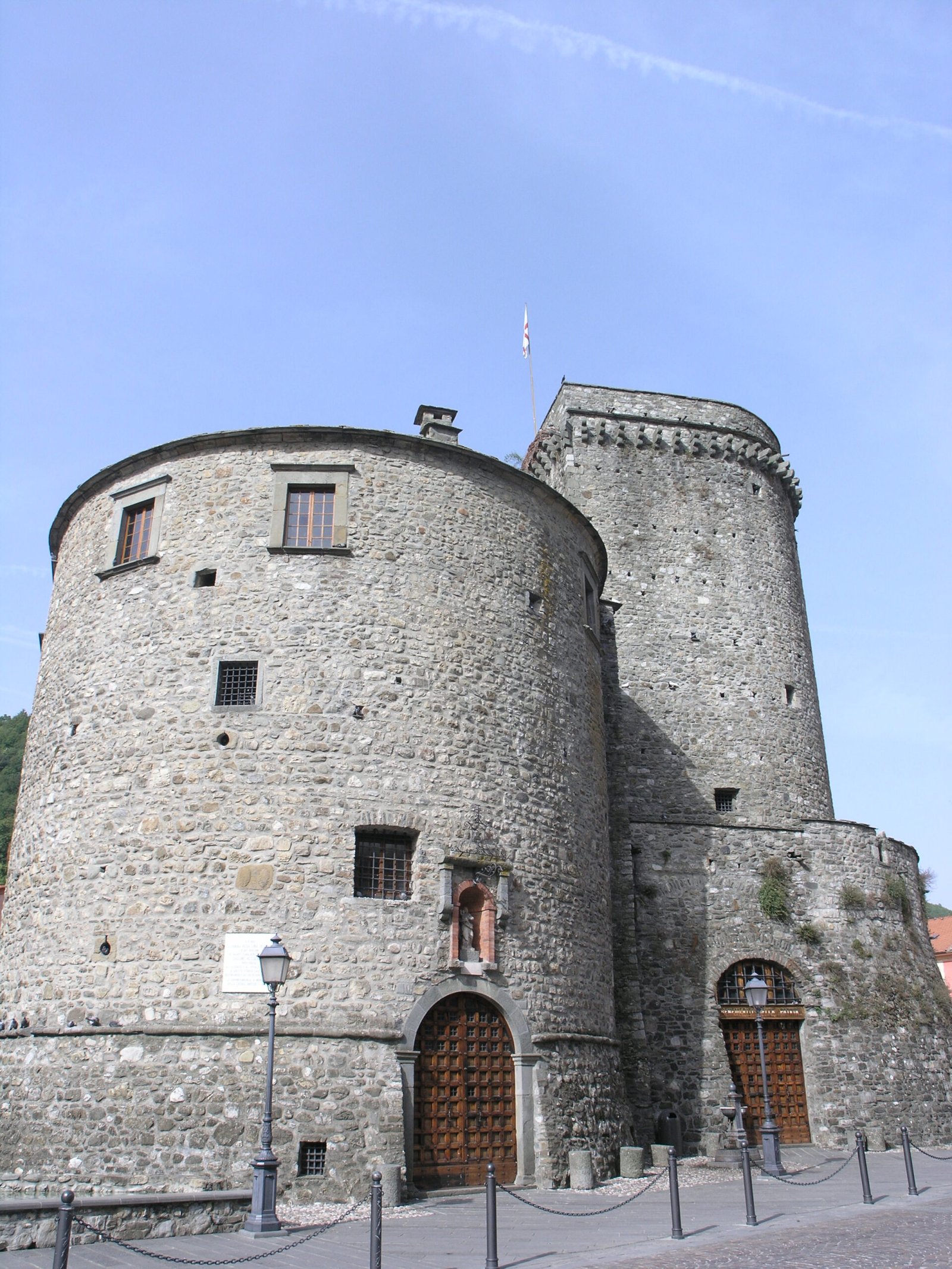
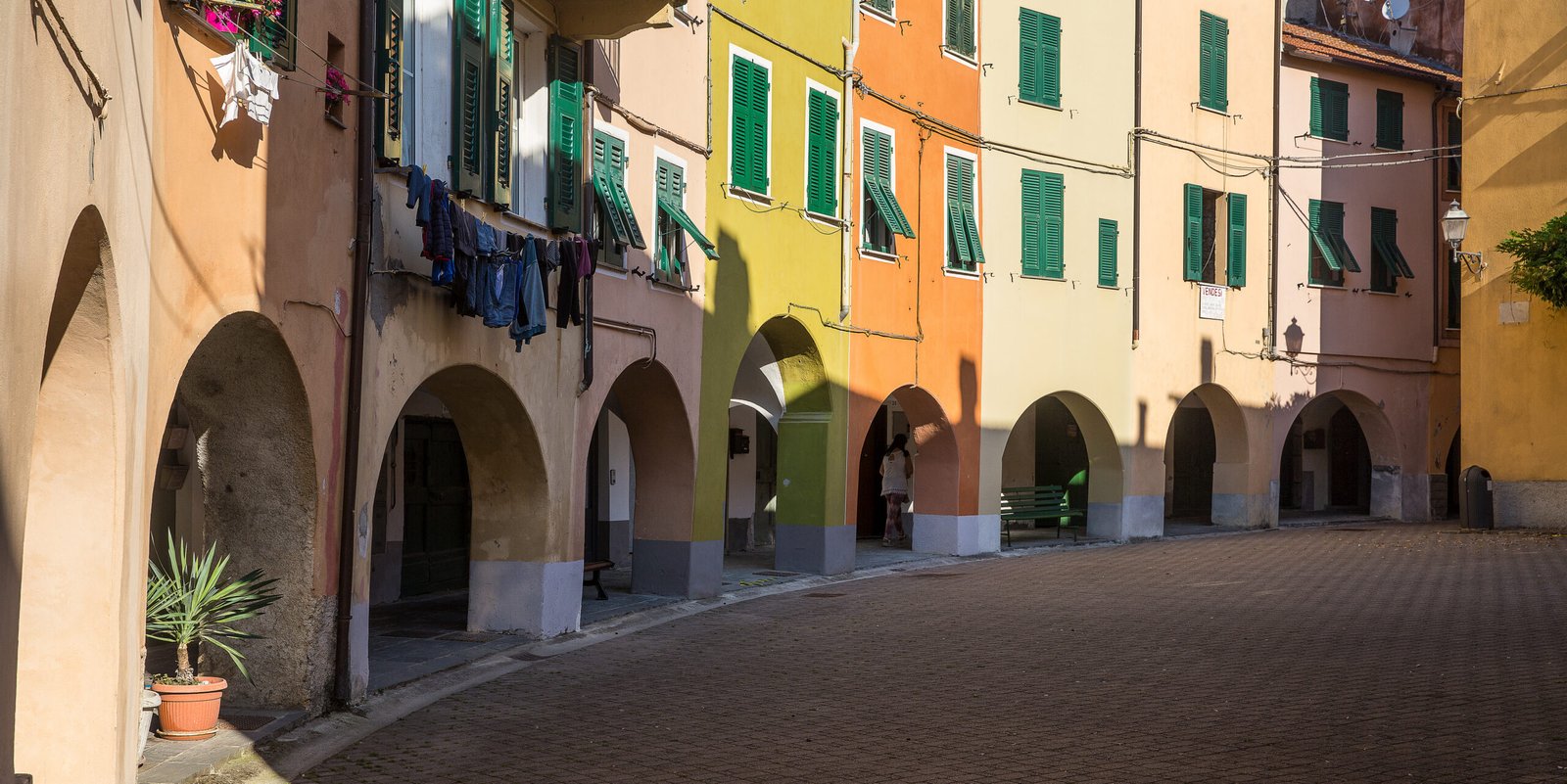
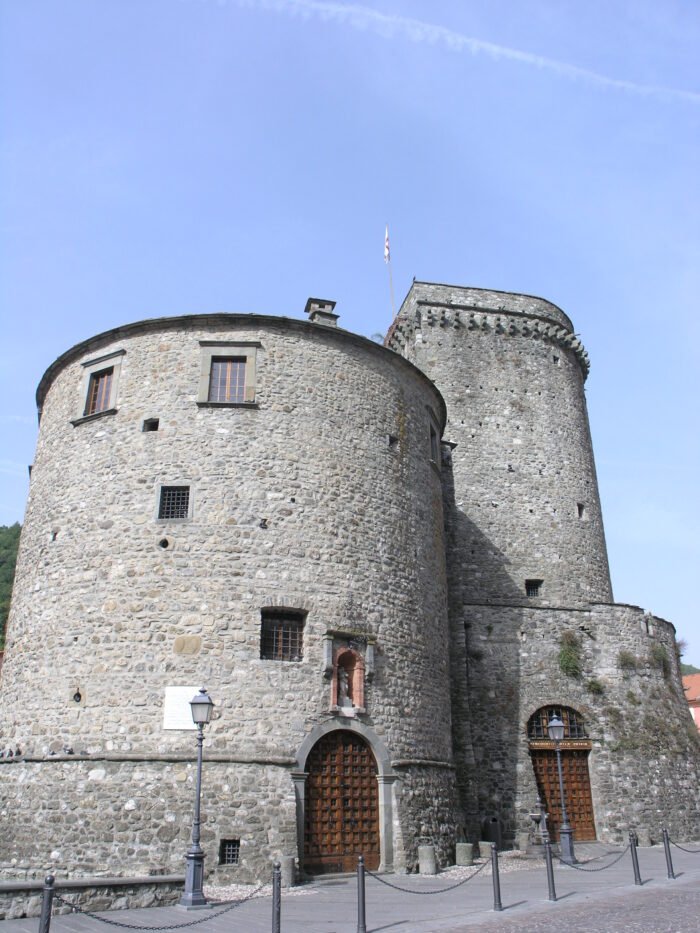
The solution was bold and innovative: the creation of a fortified village with an elliptical layout, locally known as the “Borgo Rotondo.” Identical stone houses lined the perimeter, forming a continuous defensive curtain. Beneath them, arcades housed working activities, while narrow alleys connected the dwellings to the main central road. At the northern end of the village, closing off the fortified center, the first palace was built, which became the residence of the Fieschi family in Varese Ligure.
Sieges, Towers, and Military Innovation
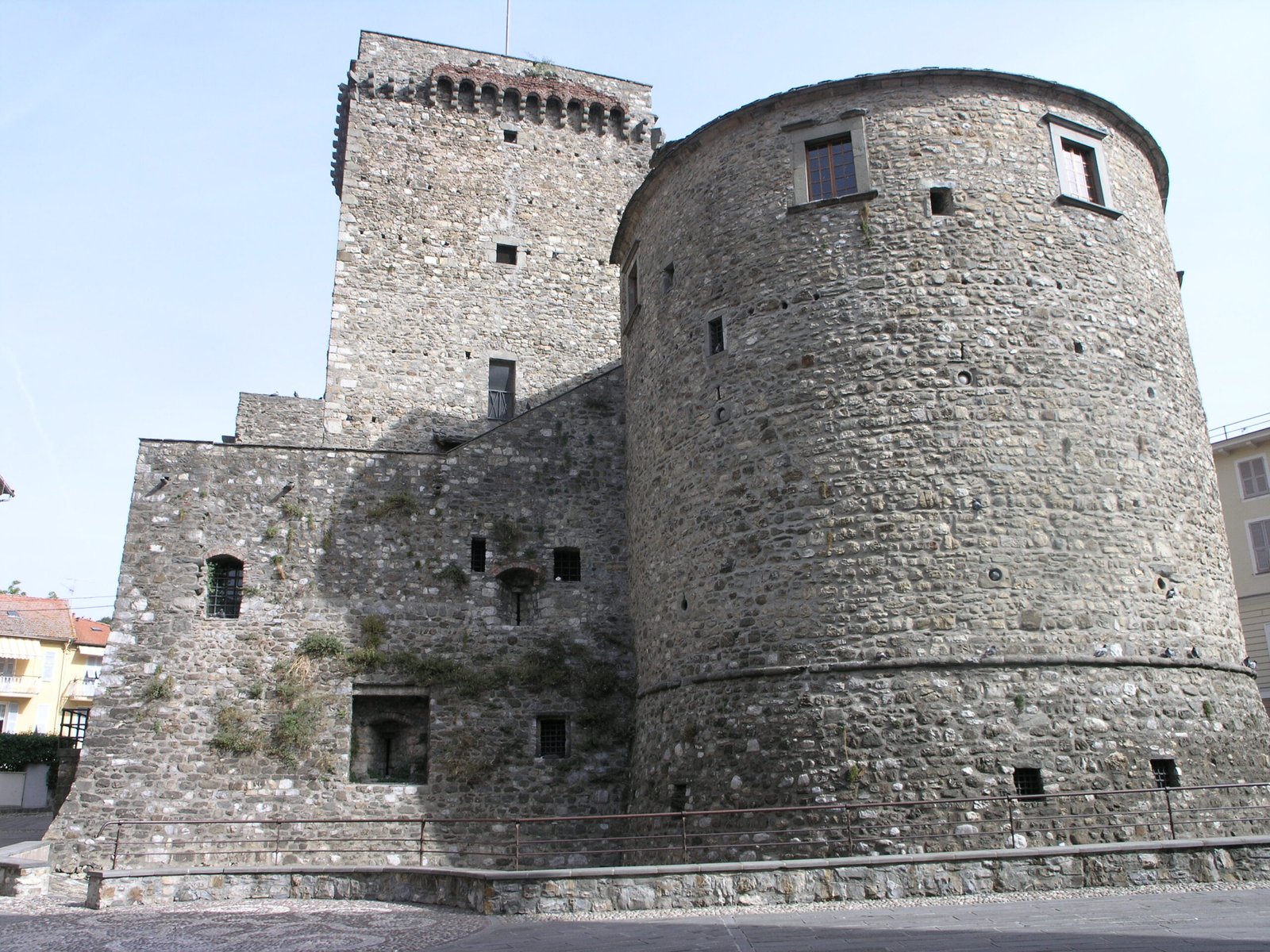
The fifteenth century marked a turbulent period. After two unsuccessful attempts, the village fell during a military expedition led by the mercenary captain Niccolò Piccinino, in the service of Filippo Maria Visconti, Duke of Milan, against the Fieschi family. It was during this time, in 1435, that the tall offensive tower was built, originally equipped with a drawbridge and considered one of the most modern and advanced defensive structures of its era. Craftsmen from Lunigiana, already renowned for building the tower of the Piagnaro Castle in Pontremoli, contributed to its construction. A few decades later, under the rule of the Landi family, a second, lower cylindrical tower with a sloping base was added, completing the defensive system.
From Feudal Power to the Republic of Genoa
The feudal rule of the Fieschi family came to a definitive end in 1547, following the failed conspiracy of Gianluigi Fieschi against Andrea Doria. This event effectively paved the way for the Republic of Genoa to take control of the territory and its feudal holdings. With the establishment of the Podesteria of Varese, the former Fieschi residence changed function: after structural modifications—such as the creation of large windows in the Landi Tower and possibly the lowering of the main keep—it became the seat of the local podestà and the town prisons.
The Castle Today: A Living Memory of the Territory
After serving various purposes over the centuries, the castle was restored in the 1960s by the Ligurian Superintendency for Monuments. Today, it is municipally owned and serves as a venue for exhibitions, conferences, and cultural events, continuing to tell—stone by stone—the complex and fascinating history of Varese Ligure.
Fonti
Geoportale Regione Liguria – Architetture; Mammola R., “Il castello di Varese Ligure ed il borgo rotondo” in Calcagno D., Cavana M., a cura di, “I Fieschi tra Papato e Impero”. Atti del Convegno. Lavagna 18 dicembre 1994 (p. 45-126). Lavagna, Istituto di Studi sui Conti di Lavagna;
https://www.archeominosapiens.it/antonio-cesena-varese-ligure/;
Bernabò B., “Varese Ligure e il suo territorio”, 1997;
https://www.halleyweb.com/c011029/zf/index.php/servizi-aggiuntivi/index/index/idtesto/121
Trekking and cycling routes that may interest you
Itineraries of different durations and suitable for every taste and level of preparation, to discover the most beautiful and evocative places and panoramas of the Ligurian Tigullio.



Local experiences that might interest you
Let yourself be guided and be surprised by the hidden treasures that the Ligurian Tigullio area is capable of offering you in every season.

Sport
Hiking routes, climbing, mountain biking and much more… Choose the sport in contact with nature that’s right for you!

Culture
Shows, Theatre, Music, Food and Wine, Reading… Experience the cultural and artistic proposals, immersed in the Ligurian landscape.

Nature
Geology, bird watching, nature engineering and other initiatives, to cultivate awareness and responsibility for environmental issues.
More heritage that may interest you
Catalog of the tangible and intangible heritage, a precious resource of the Tigullio for community building and local development.



Join us!
Preserve the history and traditions of the Ligurian Tigullio area and keep them alive for future generations.