

Geological origin of slate
Composition and Structure
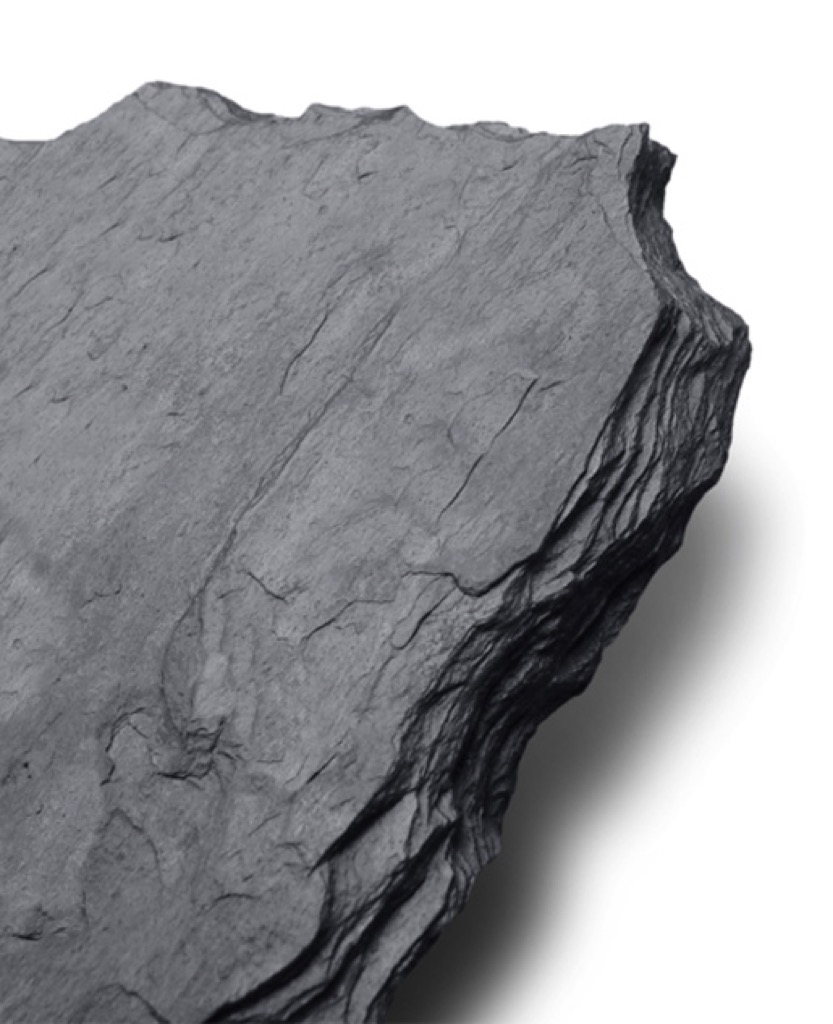
Slate is a metamorphic rock of sedimentary origin, consisting mainly of illite and chlorite (35-50%), calcium carbonate (40-50%), and quartz (10-15%). Its main characteristic is fissility, or the ability to easily divide into parallel planes, forming thin plates. This property is due to the arrangement of clay minerals on parallel planes, with calcite and quartz grains organized in lenticular structures between them. The compact structure between the fissile planes gives the sheets considerable elasticity and resistance to bending.
Origin and Formation
Slate was formed during the Upper Cretaceous, around 80-70 million years ago, when large thicknesses of mud and sand were deposited on the seabed. These sediments, called flysch, are characterized by an alternation of coarse and clayey layers. During the Alpine orogeny, sediments were covered, uplifted and deformed under oriented pressures and temperatures of 250-350°C, transforming into slate between 60 and 50 million years ago.
Mechanical and Chemical Properties
Thanks to its very fine grain, slate can be worked into thin and wide sheets, with regular surfaces and very low roughness. The microstructure of the rock, with the calcite granules wrapped by the illite lamellae, gives the slate greater resistance to the action of acid rain compared to other rocks with similar quantities of calcium carbonate. However, when exposed to light, slate tends to lighten due to the oxidation of the graphitic pigment under the action of ultraviolet rays.
Slate contains a certain amount of intergranular water (quarry water) before being quarried, which makes it softer and easier to work with. After curing, it can no longer reabsorb this water and has extremely low water absorption values, making it very resistant to frost. Thanks to its low porosity, slate is also fire resistant, with a low coefficient of thermal expansion that prevents deformations due to temperature changes.
Uses
The mechanical and chemical characteristics of slate make it ideal for various uses. Its fire resistance and low expansion make it suitable as a hob. The ease of processing due to the fine grain and relative softness of its constituents, illite and calcite, allows us to obtain thin and regular slabs, traditionally used for roofing, school blackboards, and more recently for billiard tables and other modern applications.
In summary, slate is a metamorphic sedimentary rock with a long geological history that determines its distinctive physical and chemical properties. Its workability, resistance and versatility continue to make it a valuable material in many sectors, from construction to furniture.
Sources
Brandolini P., Lagomarsino R., Nicchia P., Terranova R., “Recupero e valorizzazione turistica di emergenze geomorfologiche ambientali e storico-culturali nelle aree delle ardesie interessate da attività estrattiva nell’Appennino ligure”, in Terranova R., Brandolini P., Fipro M. (a c. di), “La valorizzazione turistica dello spazio fisico come via alla salvaguardia ambientale”, Bologna, PÁTRON Editore, 2005
Cortesogno L., Gaggero L., “Storia naturale dell’ardesia”, in Mannoni T. (a c. di), “Ardesia. Materia, Cultura, Futuro”, Genova, Sagep Editrice, 1995
Porcella M., “Gli uomini dell’ardesia”, in Centro di Documentazione della Civica Biblioteca di San Colombiano Certenoli (a c. di), “L’ardesia della Fontanabuona e le sculture di Pietro Burzi”, Chiavari, Grafica Piemme, 2017, collana “Quaderni del Lascito Cuneo”
Trekking and cycling routes that may interest you
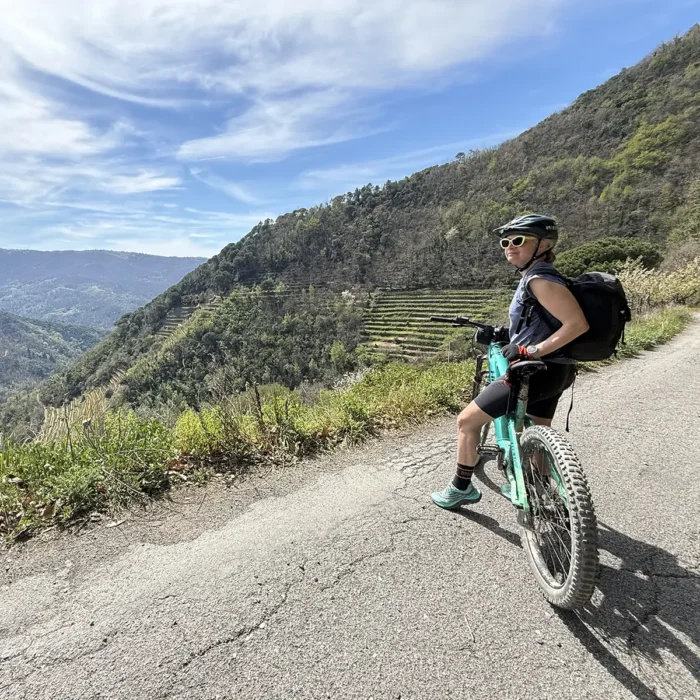
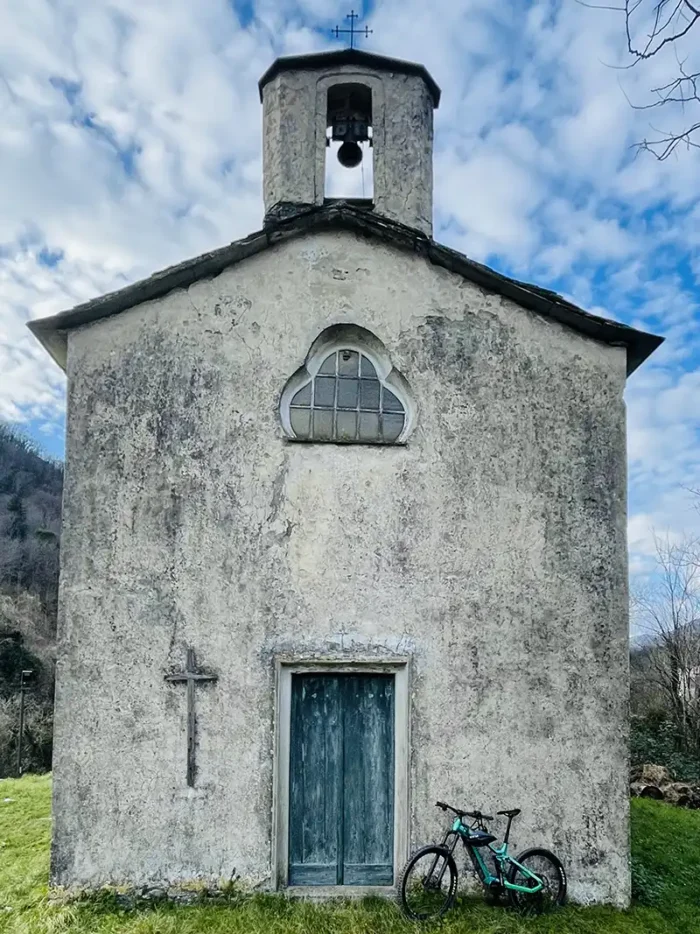
Itineraries of different durations and suitable for every taste and level of preparation, to discover the most beautiful and evocative places and panoramas of the Ligurian Tigullio.



Local experiences that might interest you
Let yourself be guided and be surprised by the hidden treasures that the Ligurian Tigullio area is capable of offering you in every season.
Sport
Hiking routes, climbing, mountain biking and much more… Choose the sport in contact with nature that’s right for you!

Culture
Shows, Theatre, Music, Food and Wine, Reading… Experience the cultural and artistic proposals, immersed in the Ligurian landscape.

Nature
Geology, bird watching, nature engineering and other initiatives, to cultivate awareness and responsibility for environmental issues.
More heritage that may interest you
Catalog of the tangible and intangible heritage, a precious resource of the Tigullio for community building and local development.




Join us!
Contribute to preserve the history and traditions of the Ligurian Tigullio area, and keep them alive for future generations.