

The slate paths
Each slate quarry in the Lavagna-Cogorno area was connected to one of the three main paths, essential for transporting the slabs to the Lavagna beach. Let’s discover together these ancient routes, crucial for the local economy and culture.
The Coast Path
The first path, known as “Strada della Costa”, descended towards Lavagna from the north. This route collected all the mule tracks of Cogorno, making it the most popular. It was the main transit channel for quarrymen, with a history of heavy traffic and vital to the slate trade.
The Rezza Path
The second path, called “Sentiero di Rezza”, began its journey from the quarries of Breccanecca and Chiappa, today known as Monticelli. This path led to Lavagna towards the west and joined the smaller path of San Rocco. It was a strategic route for the transport of slabs coming from this area full of quarries.
The Path Road of Santa Giulia
Finally, the “Strada di Santa Giulia” connected numerous paths coming from dozens of quarries in the area. This route descended towards the east, joining the secondary path of San Bernardo, near the quarries closest to the sea. It was a vital artery for the transport of slate, facilitating access to the coastal market.
The Slate Bearers: Cogornine and Lavagnine
The courageous slate carriers, known as “cogornine” or “lavagnine”, carried loads of up to 70 kg on their heads along these paths. To facilitate their arduous work, the paths were equipped with so-called “poses”, dry stone walls built specifically to temporarily rest the load. These “poses” were arranged at regular intervals and designed to be used by people of all sizes. Thanks to the horizontal support surface, the “poses” were located at increasing heights along the path, making transport more manageable and less tiring.
The paths of the Lavagna and Cogorno quarries are not only physical paths, but also historical testimonies of a tradition of hard work and resilience. These ancient paths, together with the “cogornine” and “lavagnine”, represent an invaluable cultural heritage, inextricably linked to the production and transport of slate. Discovering and enhancing these paths means rediscovering a fundamental part of our history and identity.

Sources
Bruschi R., Lebboroni S., “Ritratto di Cogorno. L’antico feudo dei Conti Fieschi attraverso le sue memorie storiche”, Genova, De Ferrari Editore, 2000
Cogorno E., “Frammenti di storia. Memorie di scampoli di vita cogornese”, BookSprint Edizioni, 2022
Porcella M., “Gli uomini dell’ardesia”, in Centro di Documentazione della Civica Biblioteca di San Colombiano Certenoli (a c. di), “L’ardesia della Fontanabuona e le sculture di Pietro Burzi”, Chiavari, Grafica Piemme, 2017, collana “Quaderni del Lascito Cuneo”
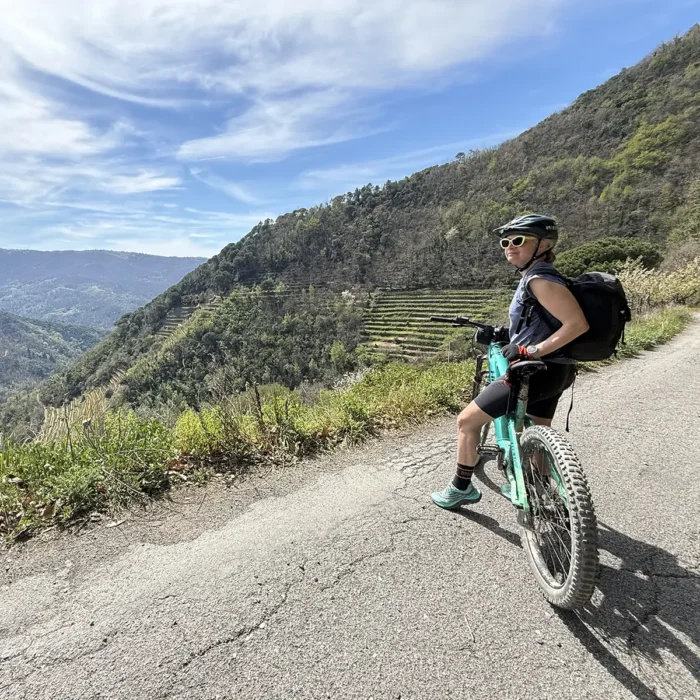
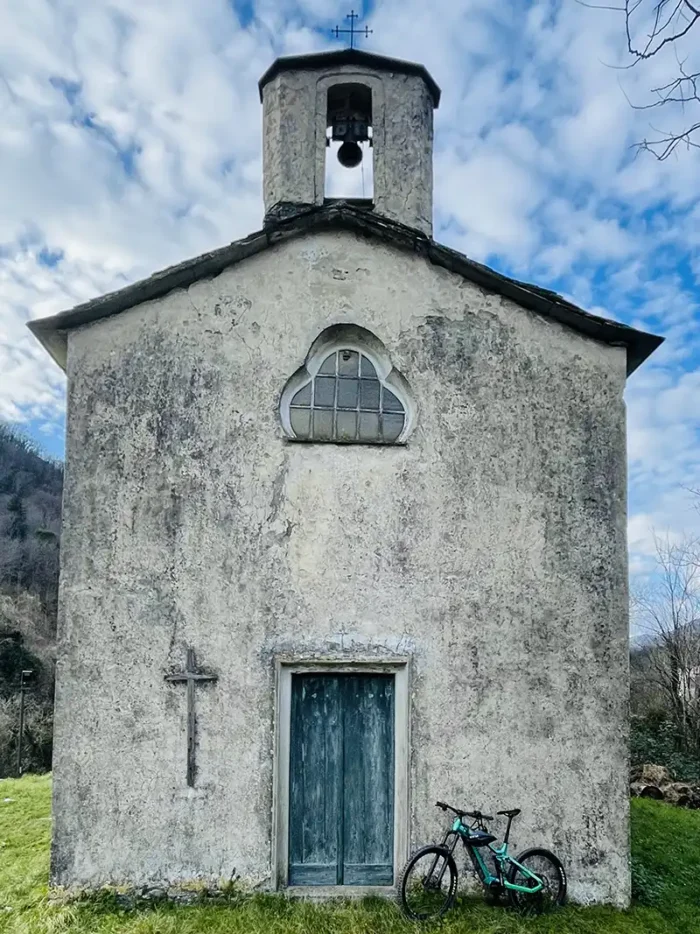
Trekking and cycling routes that may interest you
Itineraries of different durations and suitable for every taste and level of preparation, to discover the most beautiful and evocative places and panoramas of the Ligurian Tigullio.



Local experiences that might interest you
Let yourself be guided and be surprised by the hidden treasures that the Ligurian Tigullio area is capable of offering you in every season.
Sport
Hiking routes, climbing, mountain biking and much more… Choose the sport in contact with nature that’s right for you!

Culture
Shows, Theatre, Music, Food and Wine, Reading… Experience the cultural and artistic proposals, immersed in the Ligurian landscape.

Nature
Geology, bird watching, nature engineering and other initiatives, to cultivate awareness and responsibility for environmental issues.
More heritage that may interest you
Catalog of the tangible and intangible heritage, a precious resource of the Tigullio for community building and local development.


Join us!
Contribute to preserve the history and traditions of the Ligurian Tigullio area, and keep them alive for future generations.