

Oratory of Saints Filippo e Giacomo Apostoli (Borzonasca)
The Oratory Between Penna and Sturla
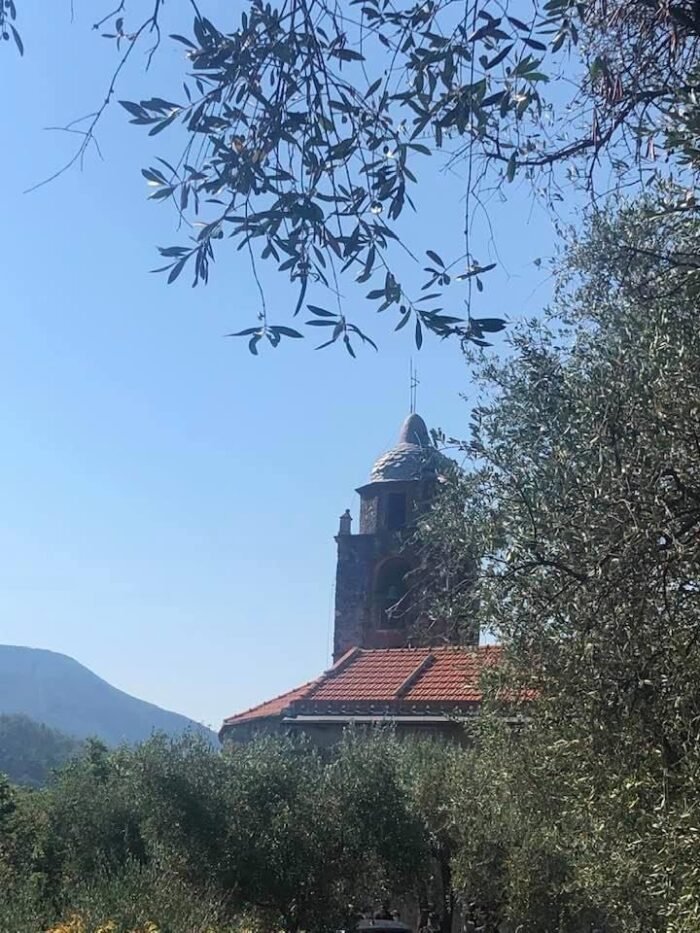
On the left bank of the Penna Stream, where its waters merge with those of the Sturla River, stands the ancient Oratory of Saints James and Philip. Once connected to the square of Borzonasca’s “lower village” by a Romanesque bridge dating back to 1182, the building has witnessed history unfold beside it, up to the destruction of the bridge in 1945 during World War II. The exact founding date of the oratory remains uncertain, but records confirm it predates the 16th century. The slate architrave above the entrance, marked 1534, commemorates a significant reconstruction coinciding with the establishment of the Confraternity of the Disciplinanti, under the protection of the patron saints.
The Crucifix and Spiritual Protection
A pivotal moment in the oratory’s spiritual life occurred in 1650, when an ancient Crucifix was solemnly transferred from the Borzone Abbey to protect it from the persecutions that forced the monks to abandon the abbey. From that time, the building became popularly known as the “Oratory of the Holy Cross”, a symbol of protection and devotion for the local community.
Conflicts and Restorations
Between the 17th and 18th centuries, the oratory became the focus of disputes between the dioceses of Genoa and Bobbio, culminating in 1702 with the interdict and excommunication issued by the Bishop of Bobbio, Mons. Ambrogio Croccio. Only in 1717, under Mons. Ildefonso Manara, did the building return to full activity, despite its state of disrepair. Eighteenth-century restorations (1780–1784) and the Napoleonic era eventually led, in 1811, to the permanent transfer of the Crucifix to the parish church.
Architecture and Art
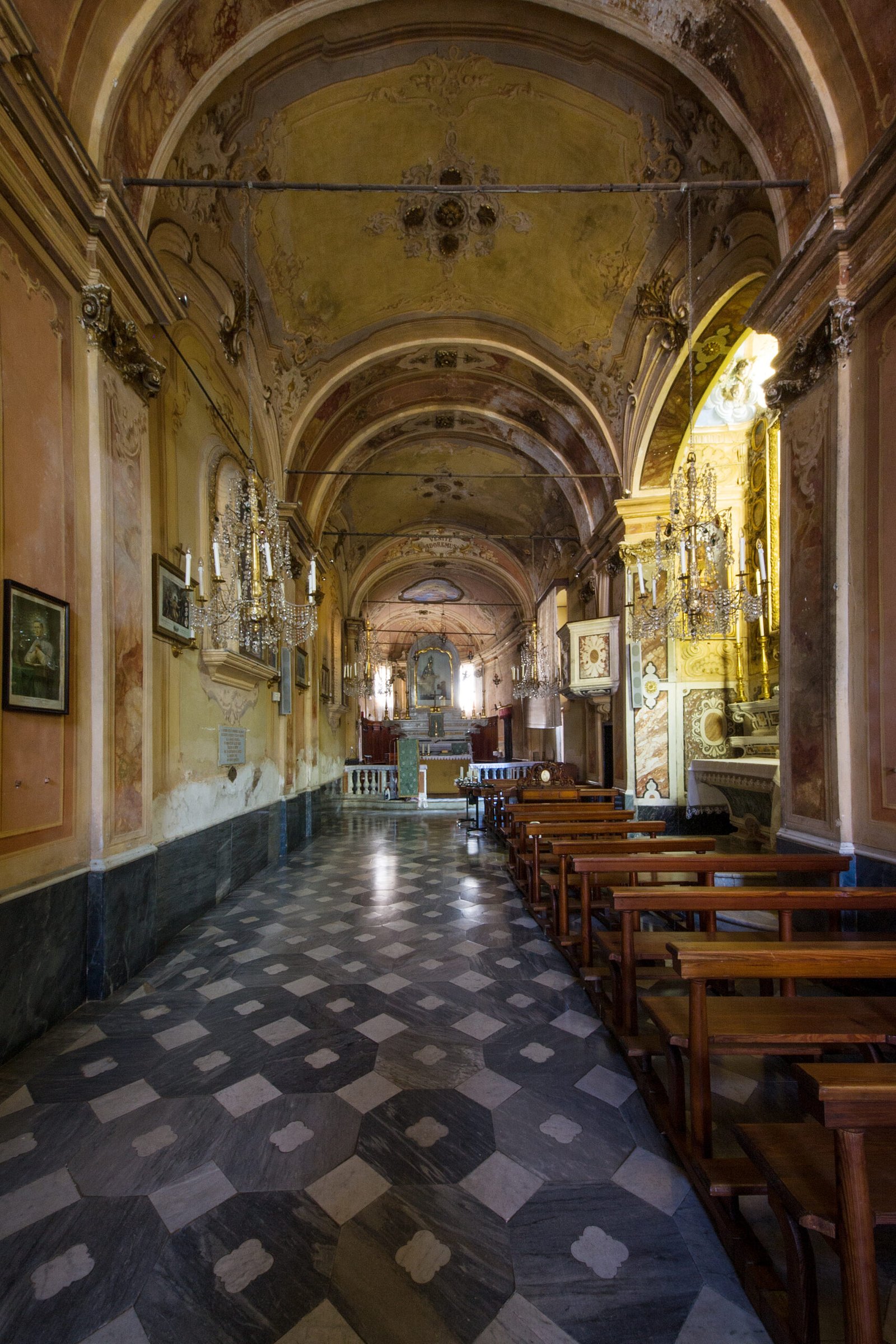
The oratory has a longitudinal nave ending in a semicircular apse. Its gabled façade, in faux bardiglio marble, is enhanced by a slate architrave and jambs and a large central bifora window. The portal features a bas-relief depicting the Virgin and Saints James and Philip in adoration, accompanied by angels and hooded confraternity members. Inside, visitors can admire Romanesque arches, Baroque friezes, and frescoes.
Signs of Popular Devotion
The main altar, once housing the Crucifix, now hosts a marble icon donated by American emigrants. Next to it stands a second altar dedicated to the Our Lady of the Rosary, seat of the confraternity of the same name, and the statue of Saint Roch, erected in gratitude for protection against the 19th-century cholera epidemic. The oratory also preserves a Crucifix and a Pietà that are carried in procession every Good Friday, continuing to serve as a center of faith and tradition for Borzonasca.
Sources
https://catalogo.beniculturali.it/detail/ArchitecturalOrLandscapeHeritage/0700111910;
Brignole G., La parrocchiale di Borzonasca. Dalla chiesa di San Bartolomeo al santuario del Santissimo Crocifisso. Indagini d’archivio e lettura del patrimonio storico artistico, tesi di laurea magistrale in Storia dell’arte e valorizzazione del patrimonio artistico, relatore D. Sanguineti, Università degli Studi di Genova, A.A. 2022/2023;
Arena R., Borzonasca 1944-1984, Edizioni Don Orione, Tortona 1984.”
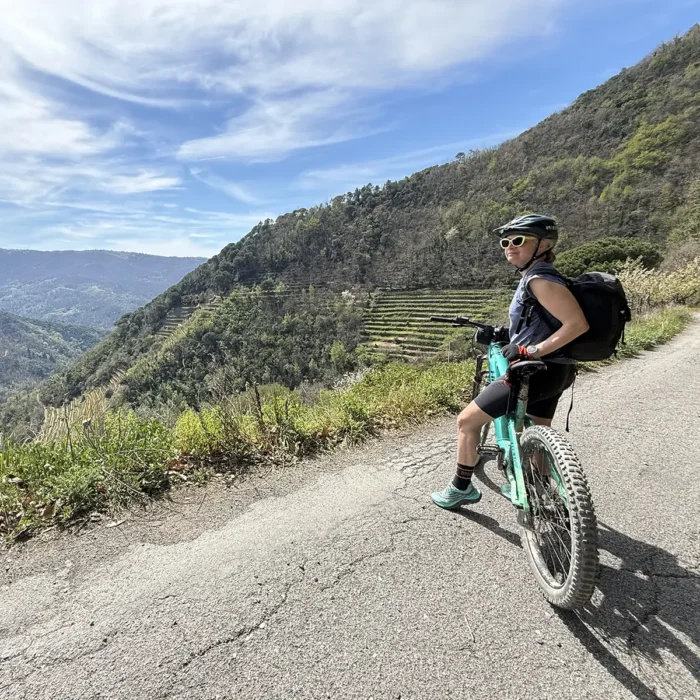
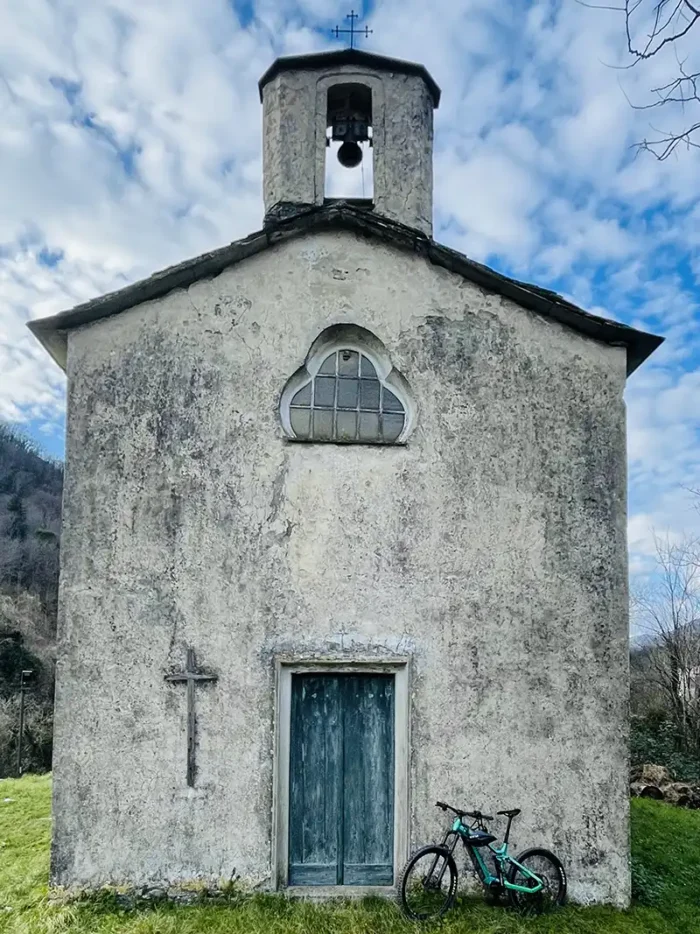
Trekking and cycling routes that may interest you
Itineraries of different durations and suitable for every taste and level of preparation, to discover the most beautiful and evocative places and panoramas of the Ligurian Tigullio.



Local experiences that might interest you
Let yourself be guided and be surprised by the hidden treasures that the Ligurian Tigullio area is capable of offering you in every season.
Sport
Hiking routes, climbing, mountain biking and much more… Choose the sport in contact with nature that’s right for you!

Culture
Shows, Theatre, Music, Food and Wine, Reading… Experience the cultural and artistic proposals, immersed in the Ligurian landscape.

Nature
Geology, bird watching, nature engineering and other initiatives, to cultivate awareness and responsibility for environmental issues.
More heritage that may interest you
Catalog of the tangible and intangible heritage, a precious resource of the Tigullio for community building and local development.



Join us!
Preserve the history and traditions of the Ligurian Tigullio area and keep them alive for future generations.