History and culture: Civil architecture, Military architecture, fortifications and castles


History and culture: Civil architecture, Military architecture, fortifications and castles
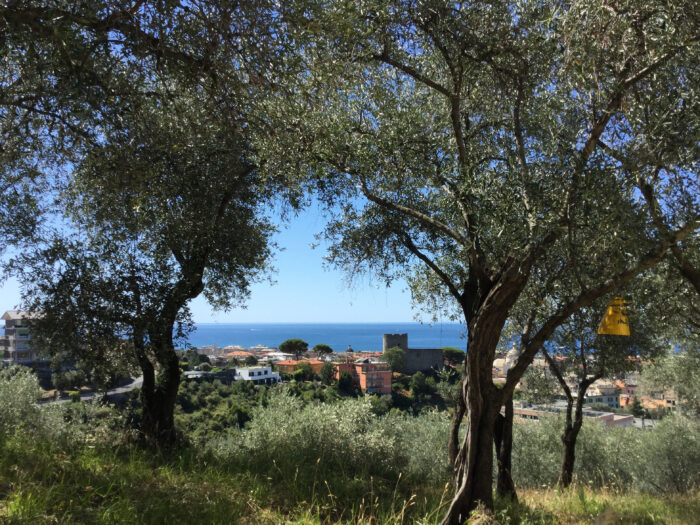
The Marconi Tower in Sestri Levante is one of the most fascinating sites in Liguria’s scientific and maritime history. Situated on the most panoramic point of the Castelli Peninsula, within the grounds of the Gran Hotel dei Castelli, the tower dominates the sea and the coast with an extraordinary view that, on clear days, encompasses much of the Riviera di Ponente and the stretch of sea toward Punta Manara.
This place, where landscape meets science, represents a landmark in the history of telecommunications: here, the great inventor Guglielmo Marconi conducted some of his most important experiments on microwaves applied to navigation.
The tower is located immediately outside the ancient walls of Sestri Levante, along a short path that crosses the promontory.
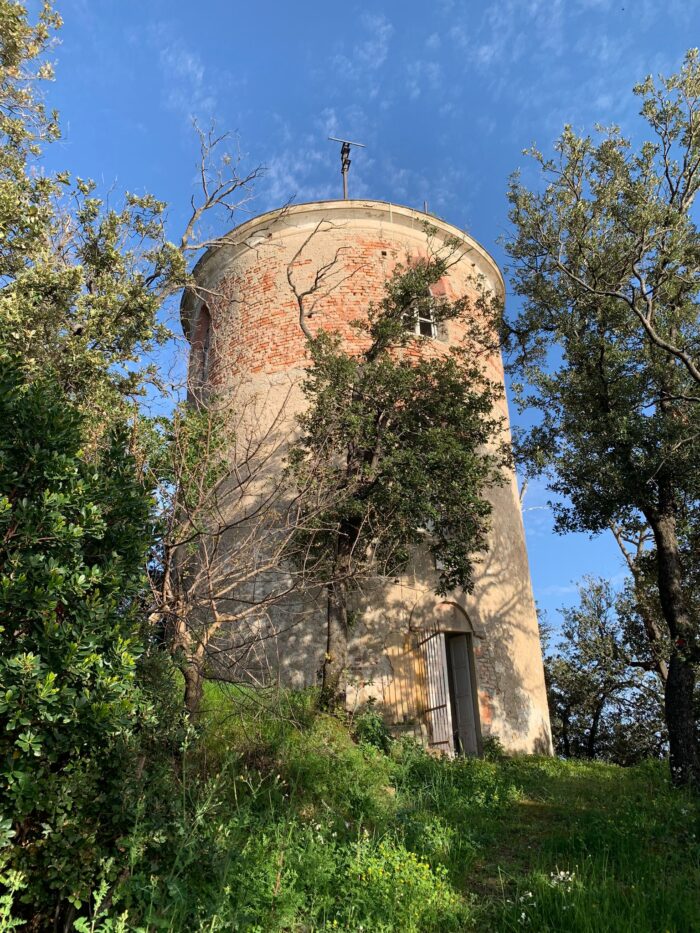
The structure features simple yet robust architectural features:
– circular plan
– approximately 10 meters high
– three internal levels
– entirely brick structure
Its dominant position suggests its original function was as a coastal lookout and signal, likely linked to the defense of the promontory and maritime surveillance.
Historical maps indicate the presence, on the same site, of an ancient keep or watchtower. This suggests that the current structure may be based on older foundations, perhaps part of a system of defensive towers that controlled maritime traffic in the Gulf of Tigullio.
Near the tower, the remains of a small stone building are also visible – likely a battery or military post – as evidenced by 18th-century maps of the promontory.
The Tower enjoyed a second life in the twentieth century thanks to Piedmontese industrialist Riccardo Gualino, owner of the Castelli peninsula since the 1920s and a close friend of Marconi.
Between 1932 and 1934, Marconi used the tower as an experimental station to test new microwave-based radio communication technologies. The culmination of this research occurred on July 30, 1934. On that day, before technicians, Italian and British naval officers, and numerous journalists, an innovative radiotelegraphy system for navigation in poor visibility was demonstrated. The experiment involved Marconi’s famous yacht, the Elettra.
The system worked as follows:
– A radio beacon was installed on the Sestri Levante peninsula;
– Two buoys 100 meters apart marked the passage through the sea;
– The Elettra departed from Santa Margherita Ligure and sailed toward Sestri Levante.
Guided only by radio signals, the ship precisely navigated the passage between buoys located approximately 800 meters from the promontory.
This experiment represented a fundamental step in the development of radar technologies and radio-assisted navigation systems, which are the foundation of maritime and aeronautical safety today.
Since 1971, the tower has been managed by the local branch of the Italian Radio Amateurs Association (A.R.I.) of Sestri Levante.
Thanks to radio amateurs, the tower continues to fulfill its original function of transmission and communication, becoming an international reference point for amateur radio.
Inside the tower are:
– small service rooms in the basement;
– on the ground floor, a lounge with historic photographs of Marconi and the Elettra;
– on the upper floor, the radio operations room;
– on the roof, a panoramic terrace accessible via a trapdoor.
The tower’s radio station uses the historic callsign IY1TTM, known to radio enthusiasts around the world.
It is no coincidence that on the nautical charts of the Italian Navy’s Hydrographic Institute, the Gulf of Tigullio is sometimes referred to as “Golfo Marconi,” in honor of the scientific studies conducted there by the great inventor.
Visiting the Marconi Tower in Sestri Levante means traversing centuries of history: from ancient watchtowers to the first radio experiments that would revolutionize modern navigation.
The Castelli promontory is not only one of the most evocative panoramic points on the Ligurian Riviera. It is also a symbolic place where scientific research has interacted with the landscape, contributing to the development of technologies that today make global communications possible.
Between the Tigullio sea, the cliffs of the peninsula, and the silence of the radio antennas, the Marconi Tower continues to tell the same story today: that of the transmission of signals, ideas, and knowledge.

Stefano Chiesa
Albertella L., Fortificazioni, edifici ecclesiastici, borghi nella Liguria di Levante nel Medioevo: comune di Sestri Levante, tesi inedita, Università degli Studi di Genova, Facoltà di Lettere e Filosofia, anno accademico 1986/1987, relatore Prof.ssa Colette Bozzo Dufour, pp. 127-130.
La torre Marconi, a cura della sezione A.R.I. di Sestri Levante (Associazione Radioamatori Italiani, www.radiomar.net)
Itineraries of different durations and suitable for every taste and level of preparation, to discover the most beautiful and evocative places and panoramas of the Ligurian Tigullio.
Let yourself be guided and be surprised by the hidden treasures that the Ligurian Tigullio area is capable of offering you in every season.

Hiking routes, climbing, mountain biking and much more… Choose the sport in contact with nature that’s right for you!

Shows, Theatre, Music, Food and Wine, Reading… Experience the cultural and artistic proposals, immersed in the Ligurian landscape.

Geology, bird watching, nature engineering and other initiatives, to cultivate awareness and responsibility for environmental issues.
Catalog of the tangible and intangible heritage, a precious resource of the Tigullio for community building and local development.
Contribute to preserve the history and traditions of the Ligurian Tigullio area, and keep them alive for future generations.